

In a world more and more outlined by convenience and pace, the appearance of UberJets is set to remodel the aviation panorama. For those who have just about any questions concerning in which and the best way to employ private jet charter empty leg flights, you are able to contact us at our own site. As the demand for quick and efficient journey grows, the concept of on-demand air taxis has captured the imagination of entrepreneurs, investors, and travelers alike. With the promise of lowering travel time, enhancing accessibility, and making air journey more reasonably priced, UberJets are poised to grow to be a pivotal player in the way forward for transportation.

The idea of UberJets, which draws inspiration from the success of trip-hailing services like Uber and Lyft, is gaining momentum in each city and rural settings. These aerial automobiles are designed to transport passengers to their destinations rapidly, bypassing the traffic congestion that plagues conventional ground transportation. With the power to land on helipads, rooftops, and other small spaces, UberJets can connect travelers to places that standard airlines could not serve.
The technological advancements in electric vertical takeoff and touchdown (eVTOL) aircraft have made this vision a reality. Corporations similar to Joby Aviation, Archer Aviation, and Volocopter are on the forefront of creating these innovative aircraft, which promise to be quieter, more environment friendly, and environmentally friendly compared to traditional helicopters. By using electric propulsion systems, UberJets can significantly scale back carbon emissions, aligning with the growing world emphasis on sustainability in transportation.
Because the business evolves, regulatory frameworks are additionally being developed to ensure the safety and effectivity of these aerial companies. The Federal Aviation Administration (FAA) and different international aviation authorities are engaged on tips that can govern the operation of eVTOL aircraft. These regulations purpose to address concerns about air site visitors administration, pilot training, and safety requirements, all of which are crucial for the successful integration of UberJets into the prevailing airspace.
One of the most significant advantages of UberJets is their potential to democratize air travel. Traditionally, private jet services have been accessible solely to the rich elite, but the introduction of on-demand air taxis could change this dynamic. With competitive pricing fashions and the power to share flights with different passengers, UberJets might make air journey more attainable for a broader demographic. This shift could open up new opportunities for enterprise and leisure travelers, permitting them to reach remote destinations that had been beforehand tough to access.
In addition to particular person travelers, UberJets hold promise for businesses trying to optimize their operations. Companies can leverage these services to transport staff rapidly to conferences, conferences, or job sites, significantly reducing journey time and growing productiveness. This effectivity might be particularly beneficial for industries that require frequent travel, such as know-how, finance, and leisure.
Regardless of the excitement surrounding UberJets, there are challenges to beat. The general public’s notion of security in air travel, significantly with new technologies, will probably be a crucial factor within the widespread adoption of those services. Building belief amongst potential passengers will require intensive testing, transparency, and effective communication from the businesses concerned. Moreover, infrastructure growth is essential to help the operation of UberJets. This contains the development of vertiports, which are designated landing and takeoff areas for eVTOL aircraft, as well as integration with existing transportation networks.
Furthermore, the environmental affect of elevated air journey have to be carefully considered. Whereas eVTOL aircraft are designed to be extra eco-friendly, the general sustainability of the business will rely upon the source of the electricity used to energy these autos. Because the world strikes in the direction of renewable vitality sources, the aviation sector should also adapt to ensure that the expansion of UberJets aligns with global sustainability objectives.
The COVID-19 pandemic has accelerated the demand for contactless and efficient journey options, additional propelling the interest in UberJets. As travelers seek options to crowded airports and conventional airlines, on-demand air taxis supply a compelling solution. The pandemic has reshaped consumer habits, with many individuals prioritizing safety and comfort of their travel choices. UberJets may provide a viable option for these looking to keep away from the hassles associated with business air journey.
A number of cities across the globe are already piloting UberJet services, with promising results. In Los Angeles, a partnership between Archer Aviation and United Airways goals to launch a network of air taxis that can connect the city to close by airports and popular locations. Equally, in Dubai, the government has invested in the development of eVTOL infrastructure, positioning the town as a frontrunner in the future of urban air mobility.
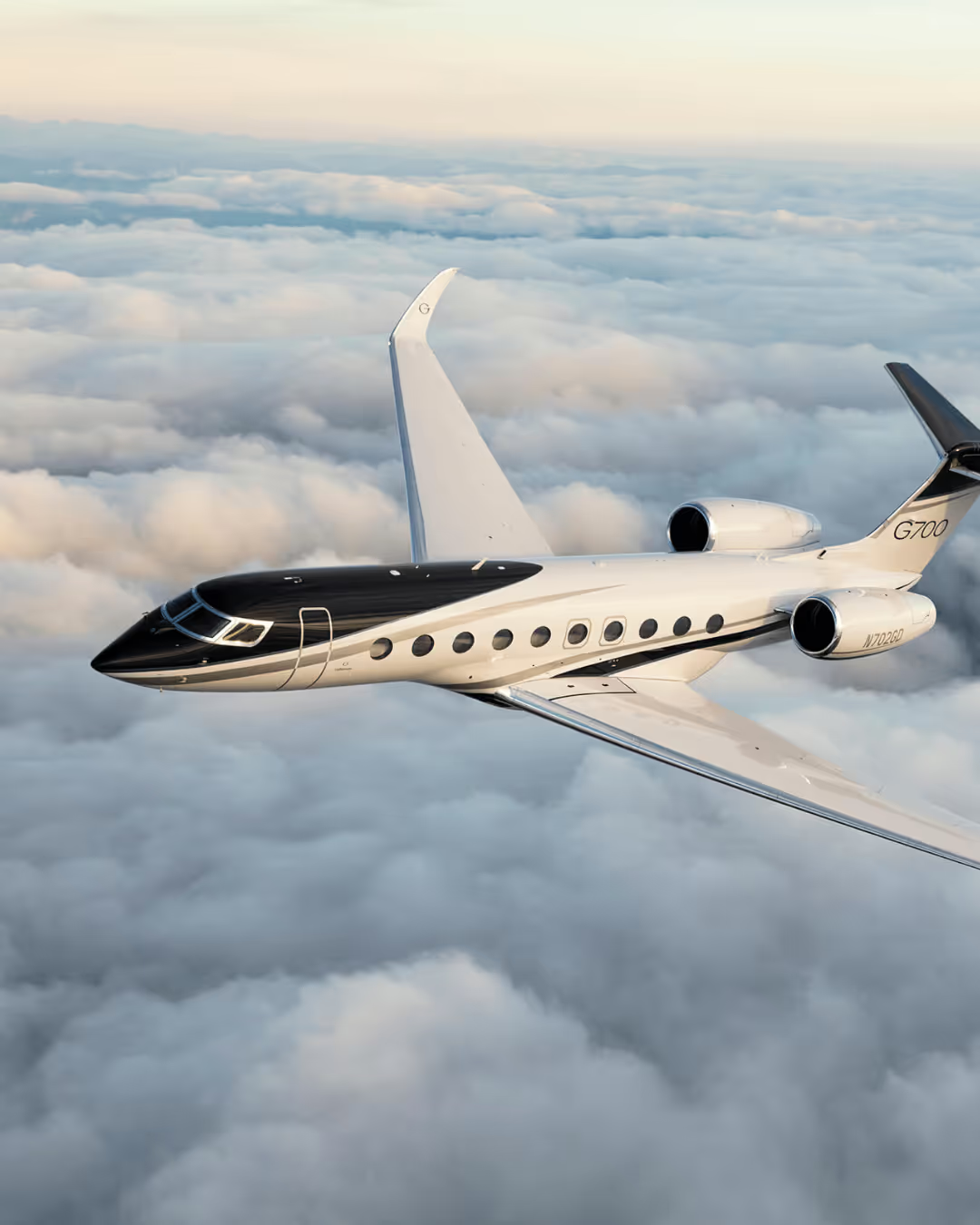
Because the technology matures and regulatory frameworks solidify, the UberJet industry is predicted to grow exponentially. Trade analysts predict that the marketplace for urban air mobility could reach billions of dollars in the approaching years, pushed by developments in expertise, elevated funding, and the rising demand for efficient travel options.
In conclusion, UberJets symbolize a big leap forward within the evolution of air journey. With their potential to cut back journey time, improve accessibility, and promote sustainability, these on-demand air taxis are poised to revolutionize the way we expect about transportation. As the business navigates the challenges ahead, the way forward for UberJets seems to be promising, offering a glimpse into a world where air travel is just not only a luxurious however a sensible and environment friendly mode of transportation for everyone. The sky may now not be the limit, but relatively a new frontier ready to be explored.